

Growth vs Dividend: Which Mutual Fund Option Suits You?


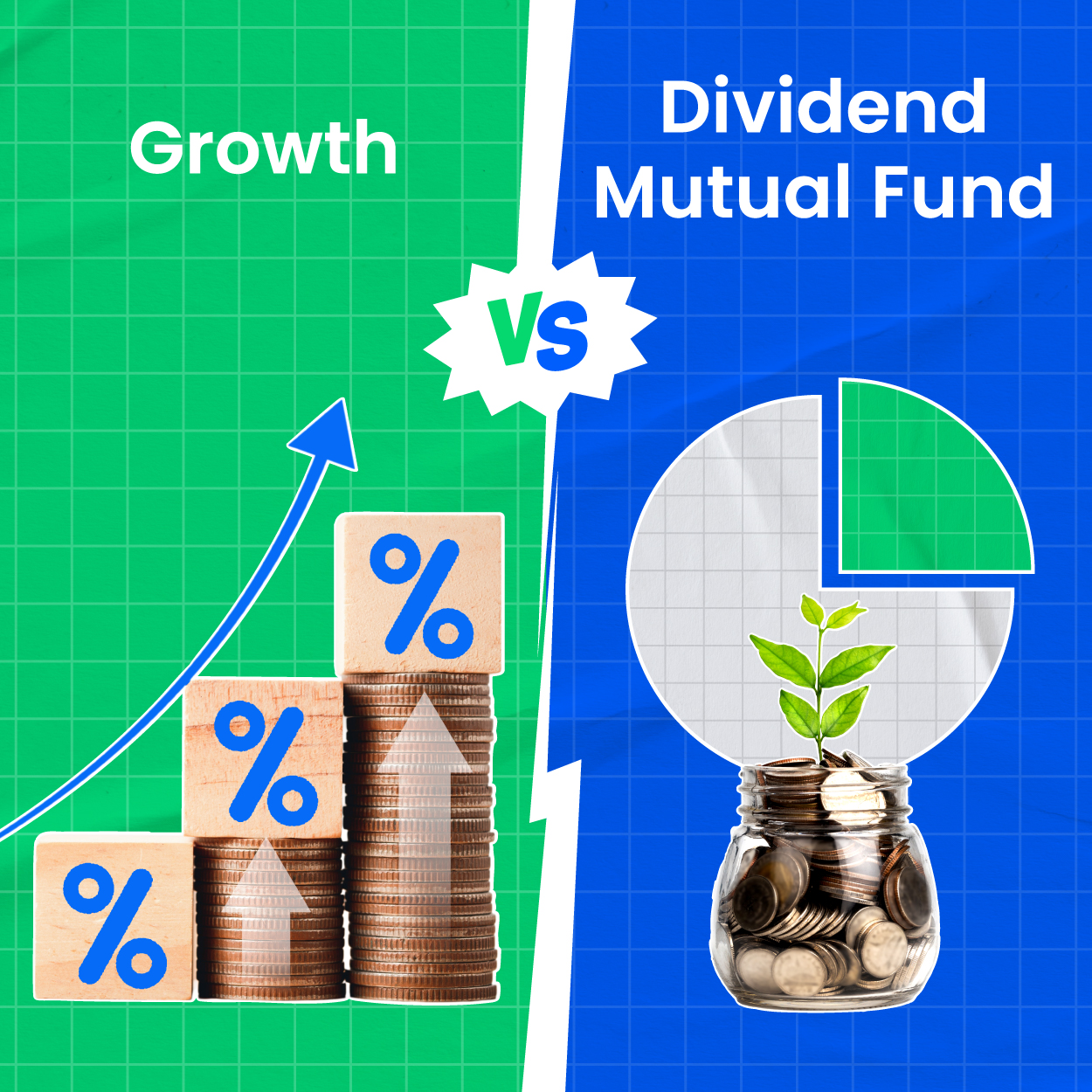
Imagine planting a sapling today and watching it transform into a towering tree over the years—that’s the magic of compounding at work. Now, picture pocketing a handful of fruits every season instead of letting them nourish the tree. Both approaches have their merits, but the one you choose depends entirely on what you want: long-term growth or steady income. The same logic applies when you pick between growth and dividend options in mutual funds. Let’s dig into each, so you can figure out which path best aligns with your financial journey.
1. The Growth Option: Let Your Investment Tree Flourish
What It Is
- Reinvestment of Profits: All earnings—capital gains, interest, and dividends—get plowed back into the fund.
- Higher NAV Over Time: Since profits aren’t paid out, the Net Asset Value (NAV) climbs steadily.
Who It’s For
- Long-Term Planners: Ideal if you’re saving for milestones more than 5–7 years away (e.g., retirement, children’s college).
- Compounding Enthusiasts: If you believe in “money making money,” this lets compounding work its magic unhindered.
- Tax-Efficient Investors: You only pay tax when you redeem units, so you can time your withdrawals to optimize capital gains taxation.
2. The Dividend Option: Enjoy Periodic Payouts
What It Is
- Regular Payouts: Profits are distributed at fixed intervals—monthly, quarterly, or annually.
- NAV Drops on Payout: Each dividend reduces the NAV by the payout amount, since value leaves the fund.
Who It’s For
- Income Seekers: Retirees or those looking to supplement salary with passive cash flow.
- Budget-Focused Investors: If you need a predictable stream to cover expenses like utilities, groceries, or EMIs.
- Lower Risk Appetite: Regular payouts can feel reassuring, like receiving a paycheck from your investments.
3. Tax Treatment: A Critical Difference
- Growth Option
- Long-Term Capital Gains (LTCG): Gains on units held over 12 months taxed at 12.5% (above ₹1.25 lakh).
- Short-Term Capital Gains (STCG): Gains on units held under 12 months taxed at 20%.
- Tax Timing: Only on redemption, giving you flexibility to plan around your tax slabs.
- Long-Term Capital Gains (LTCG): Gains on units held over 12 months taxed at 12.5% (above ₹1.25 lakh).
- Dividend Option
- Dividend Distribution Tax (DDT) Removed: Since 2020, investors pay tax at their applicable slab rate on dividends received.
- Higher-Income Impact: If you’re in a higher tax bracket, your dividend income could be heavily taxed.
- Dividend Distribution Tax (DDT) Removed: Since 2020, investors pay tax at their applicable slab rate on dividends received.
4. NAV Dynamics: Watching Your Numbers
- Growth NAV
- Starts lower but climbs over time as returns get reinvested. A ₹10 NAV today could become ₹25, ₹50, or more over a decade.
- Starts lower but climbs over time as returns get reinvested. A ₹10 NAV today could become ₹25, ₹50, or more over a decade.
- Dividend NAV
- Spikes during bull runs, then dips each time a dividend is paid. If you track NAV alone, it might look choppy, so don’t be alarmed when you see periodic drops.
5. Making the Right Choice for Your Goals
| Criteria | Growth Option | Dividend Option |
| Time Horizon | 5+ years | Short to medium term |
| Income Needs | None—aiming for corpus buildup | High—need regular cash flow |
| Tax Efficiency | High—only taxed on exit | Lower—taxed annually at slab rate |
| Risk Comfort | Comfortable with NAV volatility | Prefer predictable payouts despite NAV dips |
6. Real-World Scenarios
- Young Professional (Age 25–35)
You’re building your career, and have a 30–40 year horizon until retirement. You’re unlikely to need cash from your investments now, let compounding supercharge your wealth. Choose Growth. - Near-Retiree (Age 55+)
You want to replace part of your salary with passive income. You’re okay sacrificing some NAV appreciation for steady dividends. Choose Dividend (or a hybrid approach). - Middle-Aged Planner (Age 35–55)
You’re balancing long-term goals (kids’ education) with medium-term expenses (home renovation). Consider a split: allocate 70% to Growth and 30% to Dividend.
7. Pro Tip: Blend for Balance
You don’t have to pick one to the exclusion of the other. A blended portfolio can offer growth potential and income stability. For instance:
- 70% Growth for long-haul goals
- 30% Dividend for interim needs
This way, you capture compounding benefits while still enjoying periodic paychecks.
8. Final Thoughts
The battle between growth and dividend options isn’t about which is “better” universally, but which is better for you. Ask yourself:
- What’s my investment horizon?
- Do I need a regular income now?
- How do I want to manage taxes?
Answer these, and you will naturally gravitate toward the option that aligns with your life stage and financial aspirations.
Ready to plant your investment tree or harvest some fruits along the way? Explore mutual funds on your favourite platform—choose wisely, stay invested, and let your money work for you. At FundsIndia, we are not just a platform—we are your partner. From your first step to your biggest goals, we are here to walk with you, hand in hand.
Need help building your portfolio? Talk to our advisor today.
Related Articles
View All





Keep an eye on your inbox—your first digest will be arriving soon!

Keep an eye on your inbox—your first digest will be arriving soon!
