Manorama Industries Ltd. – Seeds to Specialty Products
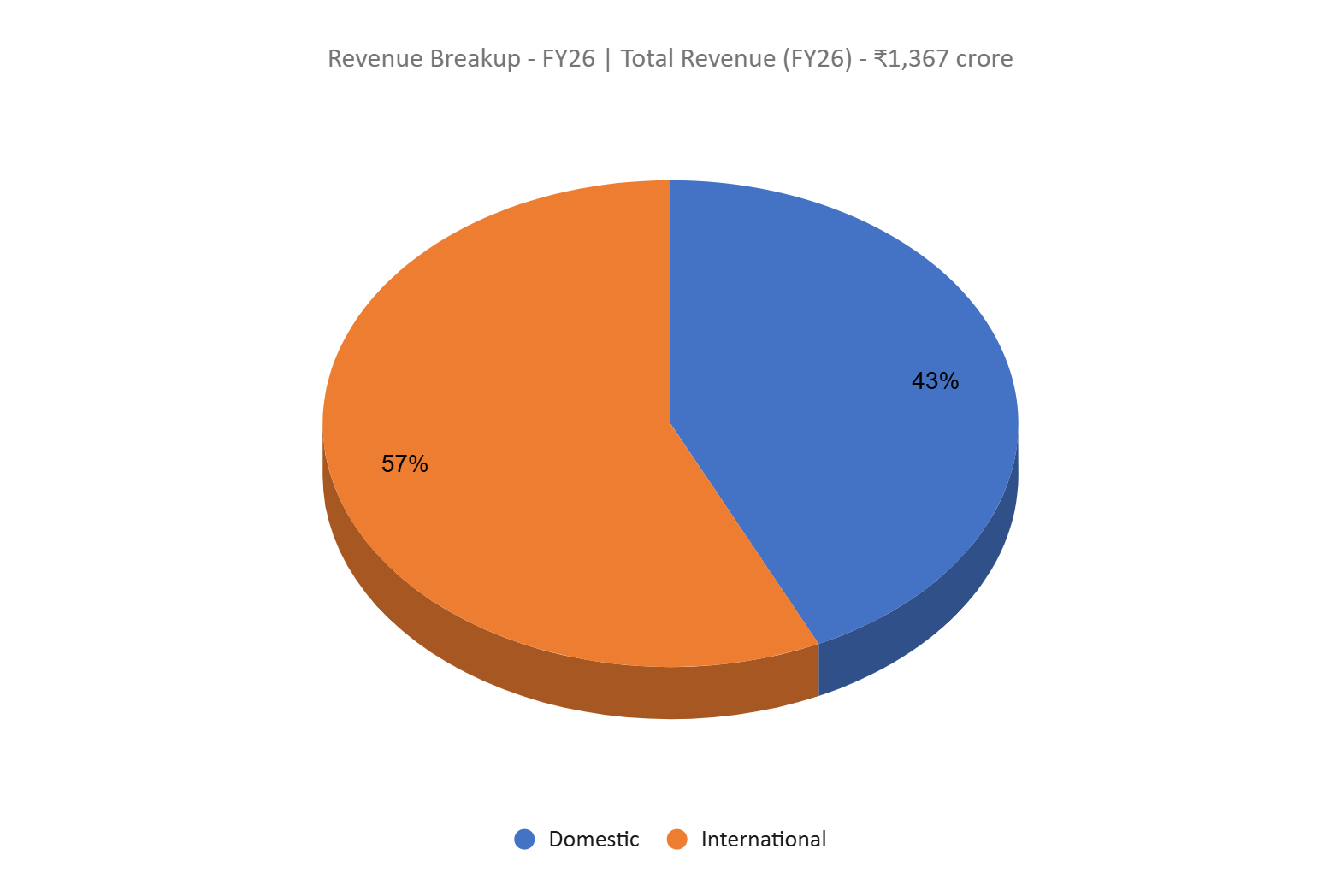
Manorama Industries Limited, incorporated in 2005 and headquartered in Raipur, Chhattisgarh, manufactures specialty fats and butters derived from exotic tree-borne seeds such as Sal, Mango, Kokum, Mowrah and Shea under a “waste-to-wealth” model. Its portfolio spans stearin and olein fractions, MILCOA® cocoa butter equivalents (CBE) and other specialty fats used in chocolate, confectionery and personal care, with stearin and CBE contributing 71.4% of FY26 revenue. Seeds are collected through a tribal-community network across India, while Shea nuts and butter are imported from Africa, supported by eight wholly owned subsidiaries on the continent (seven in West Africa and one in Chad, incorporated in Q1FY27). Processing is integrated at the company’s Birkoni facility in Chhattisgarh, with 90,000 TPA each of seed milling and solvent extraction, 45,000 TPA of refining and 47,500 TPA of fractionation capacity. The company serves customers such as Ferrero, Mondelez, Mars, Hershey, Nestlé and Barry Callebaut, along with L’Oréal, The Body Shop and Lush, across 39+ countries, with exports forming 60% of Q1FY27 revenue.
Products and Services
Manorama Industries Limited manufactures and exports specialty fats and butters derived from Sal, Mango, Shea and other exotic seeds, including Cocoa Butter Equivalents (CBE), Stearin and Olein fractions, serving industrial customers across the confectionery, chocolate, food processing, cosmetics, cattle feed and soap industries.
Subsidiary: As of FY26, the company has 10 subsidiaries and no other joint ventures/associate companies.
Investment Rationale
- Capacity Expansion & Backward Integration – Manorama’s proposed ₹460 crore capex over the next 2–3 years is focused on increasing its value-added processing capabilities through a 75,000 MTPA CBA facility, 75,000 MTPA solvent fractionation facility and 90,000 MTPA refinery, with commissioning targeted around FY28. In the near term, debottlenecking of SF2 by 30% to 32,500 MTPA should provide incremental capacity, taking total fractionation capacity to around 52,000 MTPA, which can support growth without waiting for the larger capex programme. The fact that the existing capacity was already operating at around 85% utilisation provides some demand visibility and reduces the risk of capacity being added ahead of requirements. The planned 90,000 MTPA processing facility in Burkina Faso adds backward integration into shea nuts and mango kernels, potentially improving control over raw-material availability, sourcing economics and supply security. This becomes particularly relevant as Manorama increases its exposure to higher-value specialty fats, where consistent raw-material quality is important for customer formulations.
- Capacity Expansion, Product Mix & Financial Strength – Manorama’s existing capacity was already operating at around 85% utilisation before debottlenecking, while Q1FY27 utilisation remained at ~80%, supporting the case that capacity expansion is being driven by underlying demand rather than speculative addition. The company is also increasing its exposure to Cocoa Butter Alternatives (CBA), a higher-value specialty product developed from its existing raw materials, which can support premiumisation of the product mix as volumes scale. With management targeting 80–85% utilisation for FY27 and 45–50% gross margins, execution on the expanded capacity will be critical to sustaining profitability as the business grows. The company’s 50 – 60% export contribution provides access to global customers and diversifies its revenue base, while also increasing exposure to currency and overseas demand conditions. Importantly, the expansion is being undertaken alongside an improvement in financial quality, with the working capital cycle improving from 151 days to 125 days and operating cash flow reaching ₹259.4 crore in FY26. Net debt-to-equity also improved sharply from 0.83x to 0.38x, providing greater balance-sheet flexibility for the planned investments.
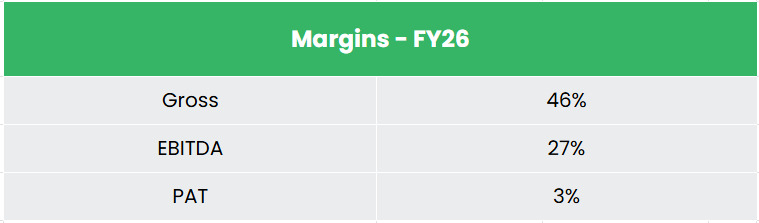
- Q1FY27 – During Q1FY27, the company reported consolidated revenue from operations of ₹404 crore, up 39.5% YoY (and 3.2% QoQ), crossing the ₹400 crore quarterly mark for the first time, though gross margin contracted ~380 bps YoY to 43.6%. EBITDA rose 42.2% YoY to ₹106 crore, with EBITDA margin expanding ~50 bps YoY to 26.3%, as employee and other expenses grew 3.0% and 15.8% respectively, well below revenue growth. Profit before tax rose 62.4% YoY to ₹106 crore and profit after tax grew 67.6% YoY to ₹79 crore at a 19.5% margin; profit growth outpaced EBITDA growth largely on other income of ₹16 crore (versus ₹6 crore), which includes mark-to-market movements on foreign currency, after negative other income of ₹7 crore in Q4 FY26.
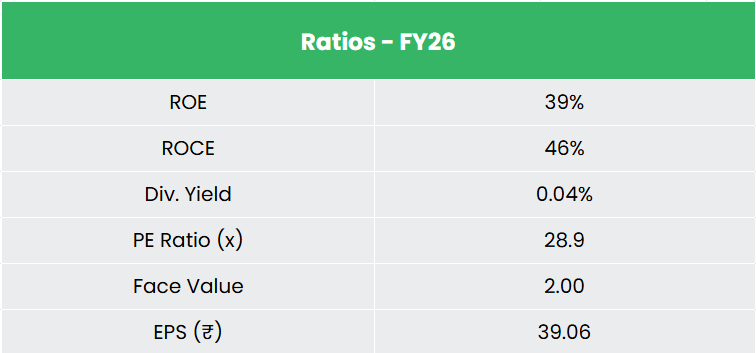
- FY26 – During FY26, the company reported consolidated revenue of ₹1,367 crore, a 77.3% YoY increase over ₹771 crore in FY25, aided by the ramp-up of the 25,000 TPA fractionation capacity commercialised in July 2025, with gross margin of 46.3%. EBITDA rose 93.8% YoY to ₹361 crore at a 26.4% margin (versus 24.2%), while profit after tax more than doubled to ₹225 crore from ₹110 crore in FY25, lifting PAT margin to 16.5% from 14.2%.
- Financial Performance – The three-year revenue and net profit CAGRs (FY23-26, standalone) stand at 57% and 99%, respectively. The three-year average ROE and ROCE (FY24-26, standalone) are 27% and 21%, improving to 40.3% and 33.6% in FY26 as new capacity scaled and margins expanded. On a consolidated basis, net debt to equity fell to 0.38x in FY26 from 0.83x.
Industry
India’s FMCG sector, the end-market for Manorama’s domestic chocolate, confectionery and personal-care customers, generated revenue of ₹25 lakh crore (US$ 289.12 billion) in FY26. Demand momentum has improved, with NielsenIQ reporting Q2FY26 value growth of 12.9% and volume growth of 5.4%, supported by a 7.7% rise in rural volumes. India’s agricultural exports rose 2.8% to US$ 52.55 billion in FY26 from US$ 51.12 billion in FY25, per Commerce Ministry data, while the food processing industry attracted cumulative FDI equity inflows of ₹1,13,051.94 crore (US$ 16.14 billion) between April 2000 and March 2026, per DPIIT. Urban markets accounted for around 62% of FMCG revenue in 2025, with rural India contributing over 38%, while rising incomes continue to support consumption. Within food, the processing industry accounts for 32% of India’s total food market, and India is expected to have 370 million Generation Z consumers by 2030, a cohort characterised by high awareness and a strong focus on health and nutrition.
Growth Drivers
- Shift to Organised and Digital Retail: E-commerce volumes grew 34.8% and value 57.7% YoY in April-June 2026, with modern trade volumes up 17.5%, even as traditional trade, which still accounts for 82% of FMCG sales, saw volumes fall 6%; this channel shift favours large branded manufacturers, which form Manorama’s core customer base.
- Rising Demand for Beauty and Personal Care: India’s beauty and personal care market is projected to nearly double to ~US$ 40 billion by 2030, driven by Gen Z-led demand, digital adoption and quick commerce, with ~20% online penetration and ~26% growth in Tier 2+ markets, supporting demand for natural butters used in skincare formulations.
- Policy Support for Food Processing: The PLI Scheme for Food Processing Industries, with an outlay of ₹10,900 crore for FY22-27, had disbursed incentives of ₹3,271.44 crore up to June 2026, while sales of PLI-supported products rose to ₹1,08,854 crore in FY26 from ₹58,758 crore in FY20. The scheme also reimburses 50% of eligible overseas branding and marketing spend (capped at 3% of food sales or ₹50 crore a year), and 100% FDI is permitted under the automatic route in food processing.
Peer Analysis
The company’s peer set includes Gokul Agro Resources Ltd, AWL Agri Business Ltd, etc.
Compared with its peers, Manorama operates at the value-added end of the vegetable fats chain, converting tree-borne seeds into CBE and specialty fats rather than refining commodity edible oils; evident in an FY26 operating margin of ~26% against ~3% for both Gokul Agro and AWL, and in the fastest three-year sales CAGR in the set. Manorama’s superior margin profile and growth visibility are reflected in a P/E of ~43x.

Outlook
Manorama Industries is positioned for continued growth, supported by increasing utilisation of its expanded fractionation capacity and a sustained shift towards higher-value specialty fats and cocoa butter alternatives. The company is targeting 85 – 90% utilisation of the expanded 52,000 TPA capacity, which should support volume growth and operating leverage without requiring immediate large-scale capacity additions. Management is also targeting 25 – 30% revenue growth next year, aided by 5–10% price realisation growth and higher contribution from value-added products. The planned ₹460 crore capex over the next 2–3 years will further expand solvent fractionation, CBA manufacturing and refining capacities, while backward integration in Burkina Faso should strengthen raw-material security. Management’s target of >6x asset turnover on the forward-integration project indicates a focus on generating high revenue from incremental capital. With 25–27% EBITDA margin and 45–50% gross margin guidance, sustained premiumisation and operating leverage could support earnings growth. The key monitorable remains the timely commissioning and ramp-up of new capacities, as the pace of utilisation will determine the extent to which the announced capex translates into incremental returns.
Valuations
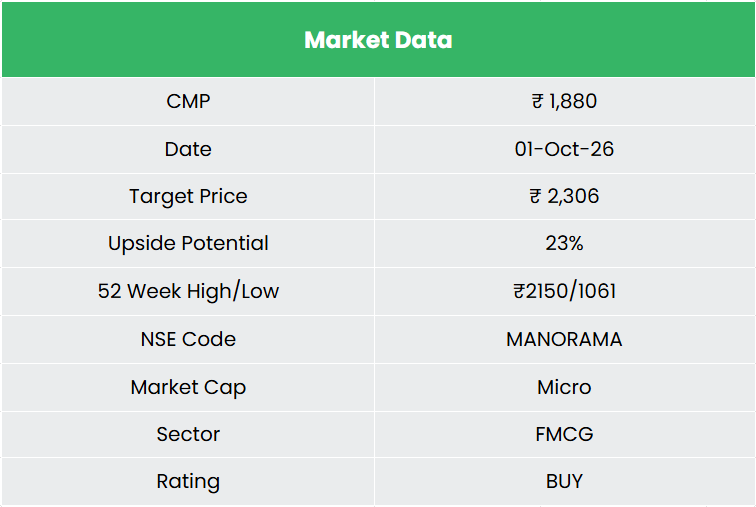
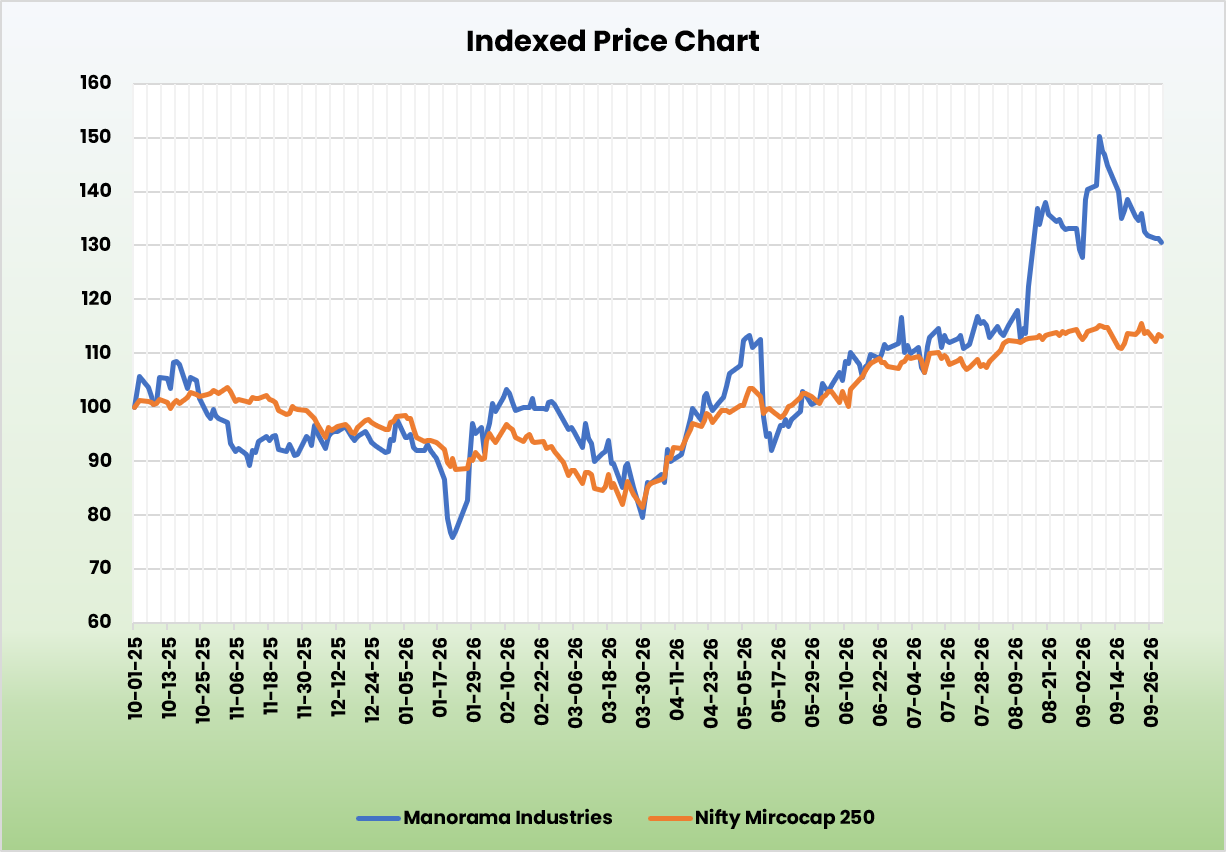
We believe strong demand and high-capacity utilisation will enable the company to effectively utilise the incremental capacity, supporting long-term revenue growth and earnings expansion. We recommend a BUY rating in the stock with the target price (TP) of ₹2,306, 41x FY28E EPS. We also encourage maintaining a stop-loss at 20% from the entry price to manage potential downside risk effectively.
SWOT Analysis
| Strength | Weakness |
|
|
| Opportunities | Threats |
|
|

Disclaimer: Investments in the securities market are subject to market risks, read all related documents carefully before investing. Securities quoted here are exemplary, not recommendatory. Please consult your financial advisor before investing. Please note that we do not guarantee any assured returns for the securities quoted here.
Research disclaimer: Investment in the securities market is subject to market risks. Read all the related documents carefully before investing. Registration granted by SEBI, and certification from NISM in no way guarantee the performance of the intermediary or provide any assurance of returns to investors.
For more details, please read the disclaimer.