Transport Corporation of India Ltd. – Everything Logistics
Transport Corporation of India Limited is a leading integrated multimodal logistics and supply chain solutions provider incorporated in 1995 and headquartered in Gurugram. The company has evolved into a dominant player across freight transportation, supply chain solutions, seaways and cold chain logistics, commanding a position that enables it to move an estimated 2% of India’s GDP by value annually. As of December 2025, TCI operates a network of over 1,000 IT-enabled owned offices managing over 16 million sq.ft. of warehousing space, demonstrating strong pan-India and cross-border presence across SAARC and BBIN regions with continued expansion momentum. Operations are executed through strategically positioned multimodal infrastructure including 10,000 trucks, 6 coastal cargo ships with 77,957 DWT capacity, 67 yards, 70 terminals and 8,500+ GP containers across India.
Products and Services
The company’s service portfolio is organised across the following business segments:
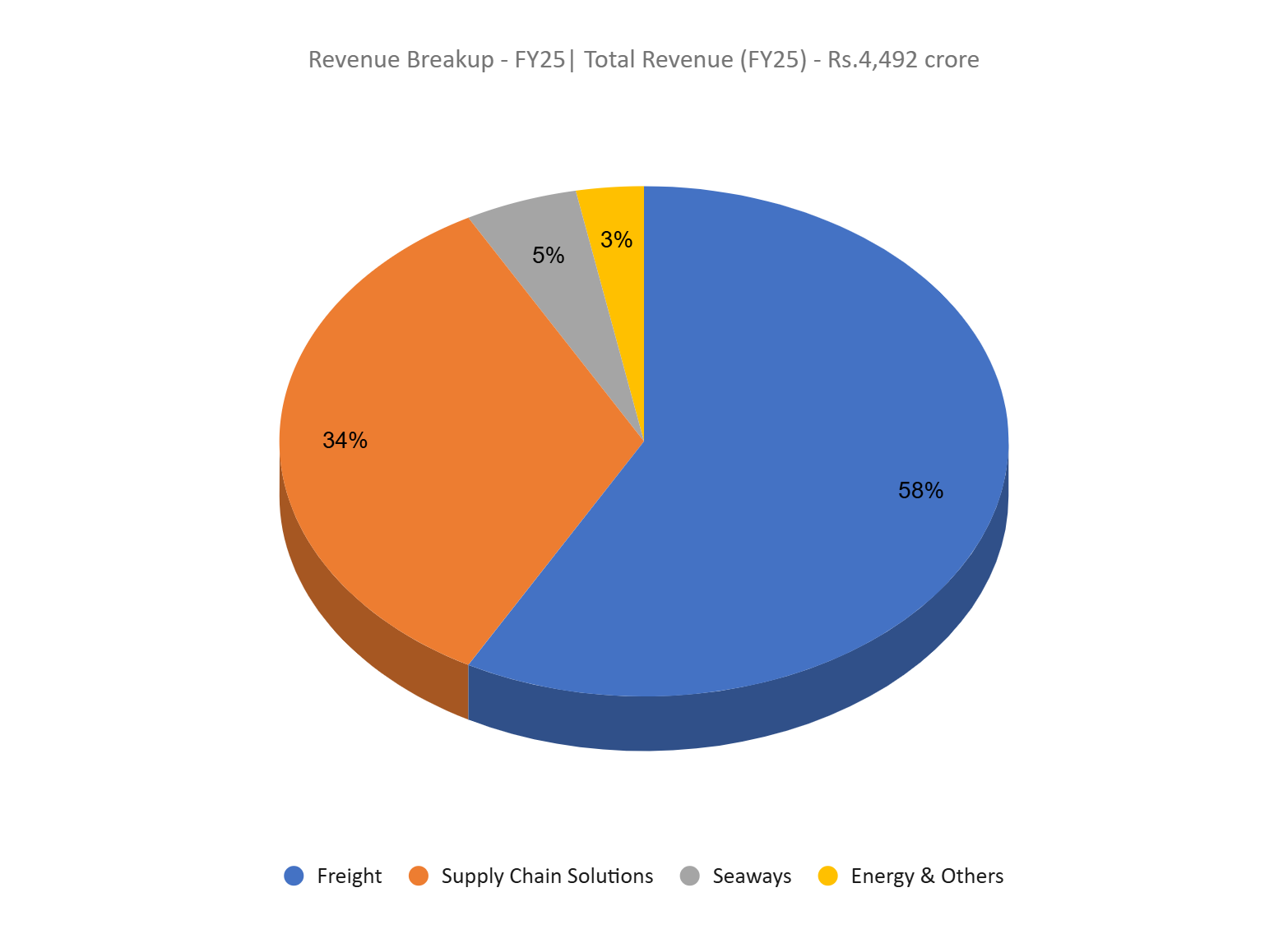
- TCI Freight Division: Handles cargo across shipment sizes, including Full Truck Load (FTL), Less than Truckload (LTL), small consignments, over-Dimensional Cargo (ODC) and Project Heavy Haul (PHH).
- TCI Supply Chain Division: Provides end-to-end solutions such as supply chain consulting, inbound logistics, warehousing and distribution centre operations, along with outbound logistics.
- TCI Seaways Division: Offers domestic and international shipping services, covering coastal movement, liner agency operations, breakbulk, project cargo and containerised logistics.
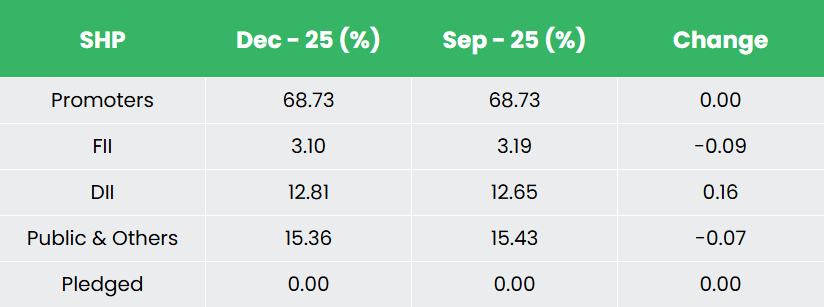
Subsidiaries: As of FY25, the Company has 8 subsidiaries, 1 joint venture company and 1 associate company.
Investment Rationale
- Structural growth driven by multimodal expansion – TCI’s growth outlook is anchored less on cyclical freight recovery and more on structural shifts underway in India’s logistics ecosystem. GST-driven formalisation, continued government infrastructure investment and the policy push toward coastal shipping (aiming to raise modal share from ~6% to ~12% over time) are gradually moving freight away from fragmented road transport toward organised multimodal networks, a segment where TCI already operates at scale. Its integrated single-window model is increasingly relevant as clients consolidate vendors and prefer bundled transport, warehousing and coastal services, improving relationship stickiness and supporting pricing discipline rather than mere volume chasing. Operational traction is visible: rail rake movement reached 2,133 rakes in 9M versus 2,500 for the full year earlier, container handling was ~121k TEUs against ~154k last year, and automobile logistics volumes have nearly matched prior full-year levels ahead of year-end, pointing to improving utilisation rather than episodic demand. The planned addition of two specialised rakes by CY2026, including higher-capacity double-deck vehicle carriers and dedicated customer capacity, further strengthens service reliability during railway capacity constraints.
- Investments weighing on margins but supporting future returns – Current earnings softness is largely concentrated in the freight division, where weak pricing and a shift mix had compressed margins; however, management commentary suggests this is cyclical rather than structural, with LTL-to-FTL mix stabilising and operational changes likely to reflect over the next couple of quarters. Importantly, weaker profitability is occurring alongside capacity and network investment, hence ROCE compression is more timing-led than demand-led. Supply chain solutions grew ~15% despite margin dilution due to upfront hiring, warehousing readiness and contract onboarding costs; this indicates the company is preparing for contracted revenue rather than chasing spot volumes. Automotive logistics and quick-commerce-linked warehousing demand remain strong, supporting future utilisation improvement and operating leverage, which historically pushes ROCE back above 20% once ramp-up stabilises. The seaways segment continues to deliver stable margins with steady fuel costs and fleet availability restored, providing earnings ballast during freight recovery. Joint ventures also show healthy growth, reinforcing that weakness is isolated rather than company-wide.
- Q3FY26 – During the quarter, the company reported a total income of Rs.1,261 crore, up 9% YoY compared to Rs.1,154 crore in Q3 FY25. EBITDA grew 9% YoY, from Rs.148 crore to Rs. 162 crore. Net profit stood at Rs.116 crore, up 14% YoY from Rs.102 crore.
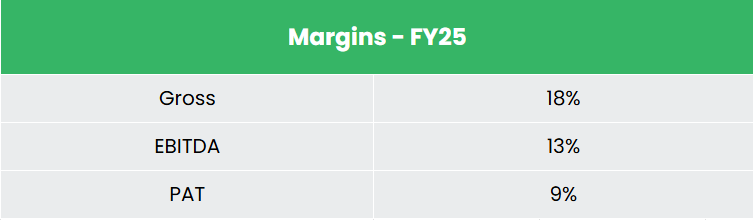
- FY25 – During FY25, the company reported total income of Rs.4,492 crore, representing a 12% YoY increase. EBITDA stood at Rs.597 crore, up 12% YoY. Net profit was recorded at Rs.416 crore, posting a growth of 17% YoY.
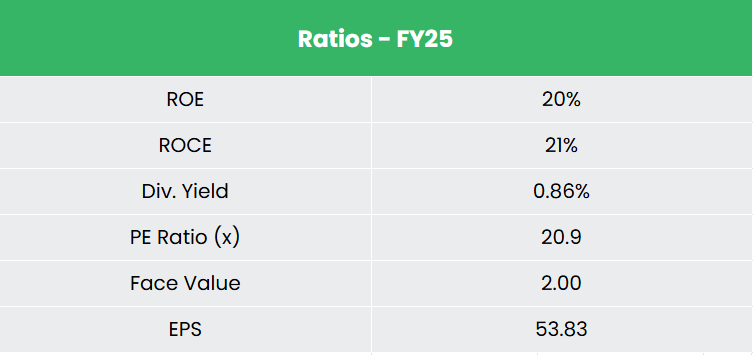
- Financial Performance – The 3-year revenue and net profit CAGR stands at 11% and 12% respectively between FY23-25. The company has a debt-to-equity ratio of 0.11, and the 3-year average ROE and ROCE are around 20% and 21% for FY23-25 period.
Industry
The Indian logistics sector forms a critical enabler for economic development, projected to grow from US$ 317 billion in 2024 to over US$ 480 billion by 2029 at a CAGR of 8-10%. The sector contributes significantly to India’s trade ecosystem, with road transport accounting for 60% of freight movement and ports handling 95% of India’s international trade by volume. India’s road network, the largest in the world at 6.62 million kilometers as of August 2025, witnessed national highway construction of 5,614 km in FY25 against a target of 5,150 km. Port cargo handling capacity has nearly doubled from 965 MMTPA in FY16 to 1,630 MMTPA in FY24, with major ports handling 854 MMT in FY25, marking a 4.3% YoY growth. The 3PL market, valued at US$ 15 billion, is growing at a 15% CAGR, though penetration remains at 4.5% compared to 11% globally, indicating substantial headroom for organized players.
Growth Drivers
- Infrastructure modernization and policy thrust – The Union Budget 2026-27 placed logistics and transport at the heart of India’s growth strategy, allocating Rs.5,985.2 billion (bn) to the transport sector. The allocation is intended to improve freight efficiency, lower logistics costs and enhance export competitiveness through greener freight routes and faster clearances.
- Digital transformation driving operational efficiency – Accelerated digitization through ULIP, National Logistics Portal, and adoption of AI, IoT, and blockchain are enhancing real-time visibility, reducing transit times, and lowering logistics costs.
- Liberalized FDI regime and private sector participation – 100% FDI permitted under automatic route in roads and ports.
Peer Analysis
Competitors: Container Corporation Of India Ltd, VRL Logistics Ltd, etc.
Compared to peers, TCI benefits from its integrated multimodal model, reflected in its leading return ratios. The company’s debt-to-equity ratio of 0.11x and cash surplus of over Rs.2,550 Mn support liquidity and limit funding requirements during expansion.

Outlook
TCI’s outlook remains supported by its integrated logistics model spanning road, rail, coastal shipping and warehousing, positioning it to benefit from the structural shift toward organised multimodal transport. Management guides for consolidated revenue growth of ~10 – 12% and earnings growth of ~15%, driven largely by utilisation improvement rather than pricing-led expansion. The addition of new ships in FY27 may create temporary margin pressure during the ramp-up phase, but overall profitability is expected to remain healthy. Importantly, the company expects EBIT margins to sustain around the ~30% range despite ongoing capex, indicating disciplined expansion and favourable business mix. As contracted business scales up, operating leverage should gradually offset near-term cost absorption. Overall, earnings visibility remains steady with improving quality of growth over the medium term.
Valuations
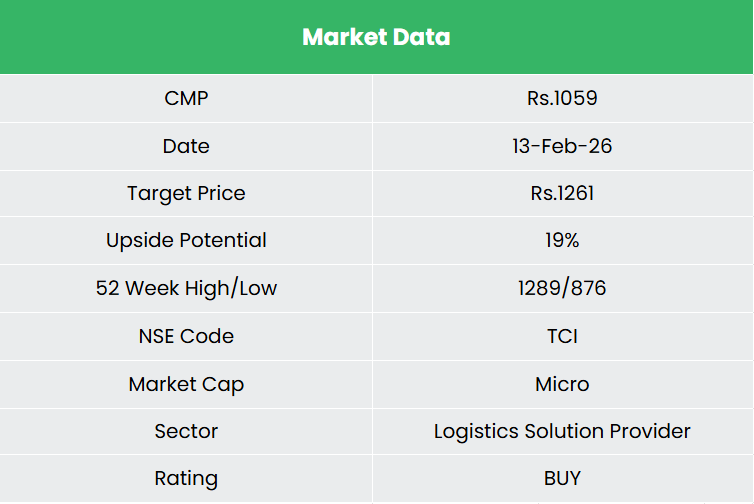
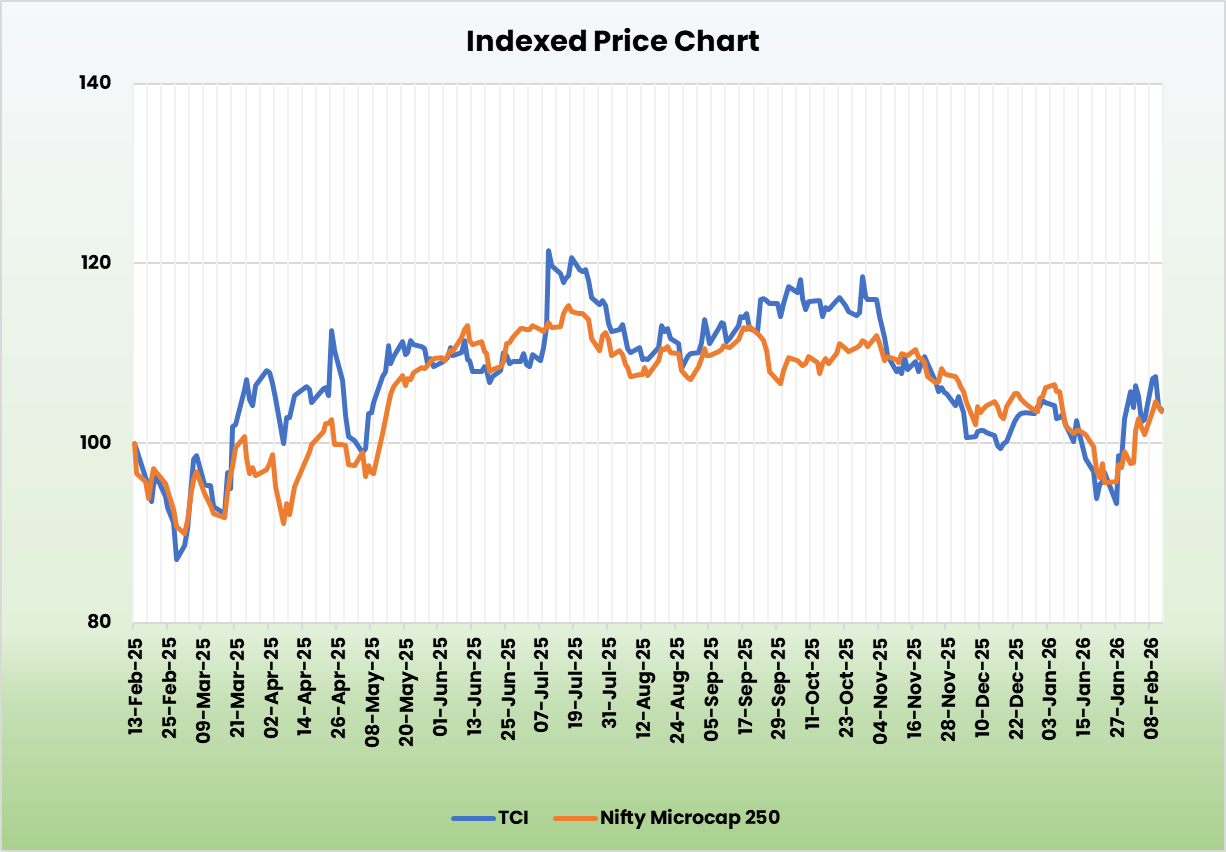
We believe TCI is well positioned to address the needs of a wide customer base supported by its pan India network and integrated multimodal operations. We recommend a BUY rating in the stock with the target price (TP) of Rs.1,261, 21x FY27E EPS. We also encourage maintaining a stop-loss at 20% from the entry price to manage potential downside risk effectively.
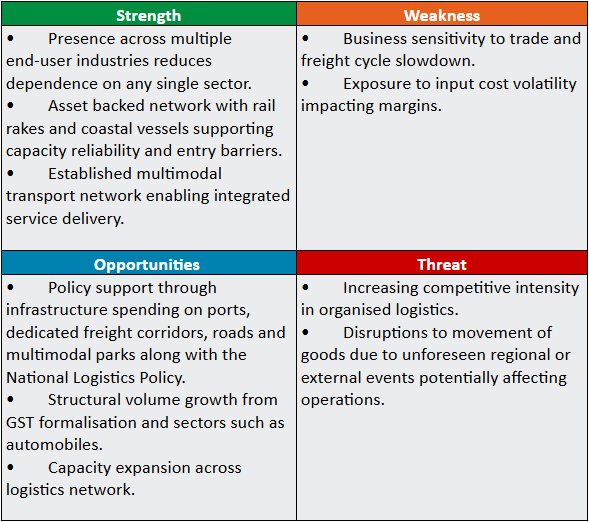
SWOT Analysis

Disclaimer: Investments in the securities market are subject to market risks, read all related documents carefully before investing. Securities quoted here are exemplary, not recommendatory. Please consult your financial advisor before investing. Please note that we do not guarantee any assured returns for the securities quoted here.
Research disclaimer: Investment in the securities market is subject to market risks. Read all the related documents carefully before investing. Registration granted by SEBI, and certification from NISM in no way guarantee the performance of the intermediary or provide any assurance of returns to investors.
For more details, please read the disclaimer.